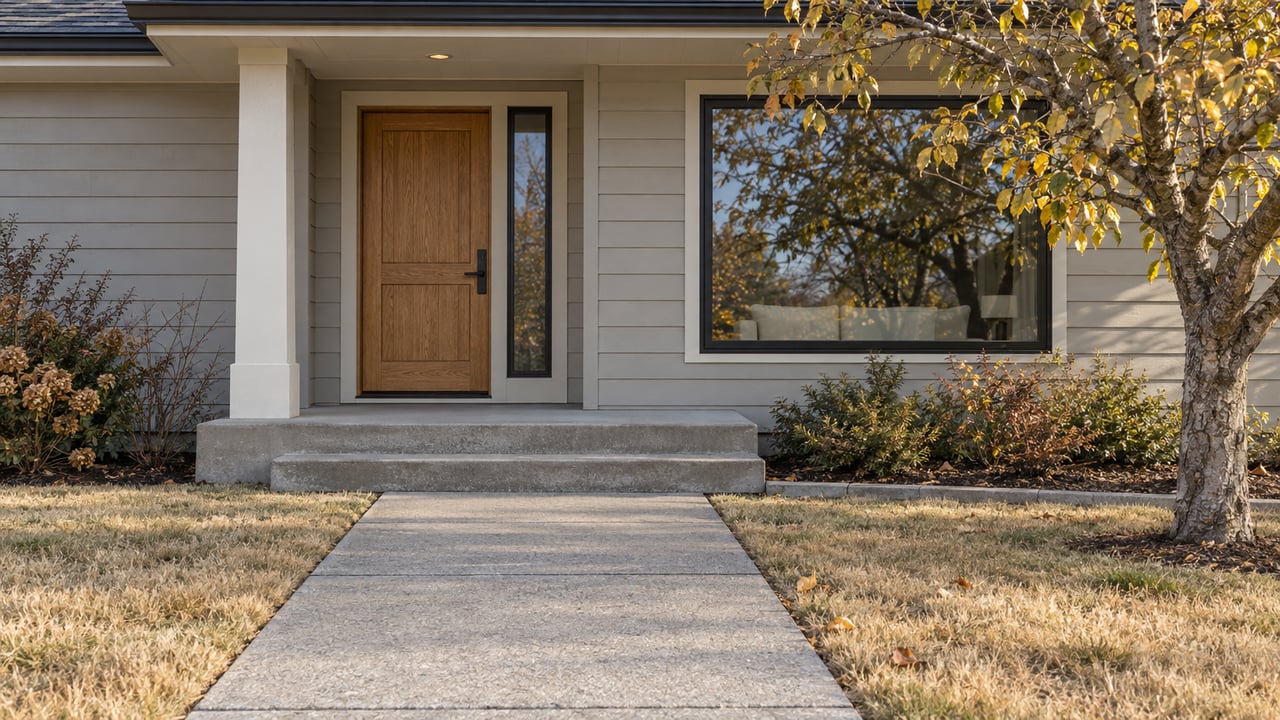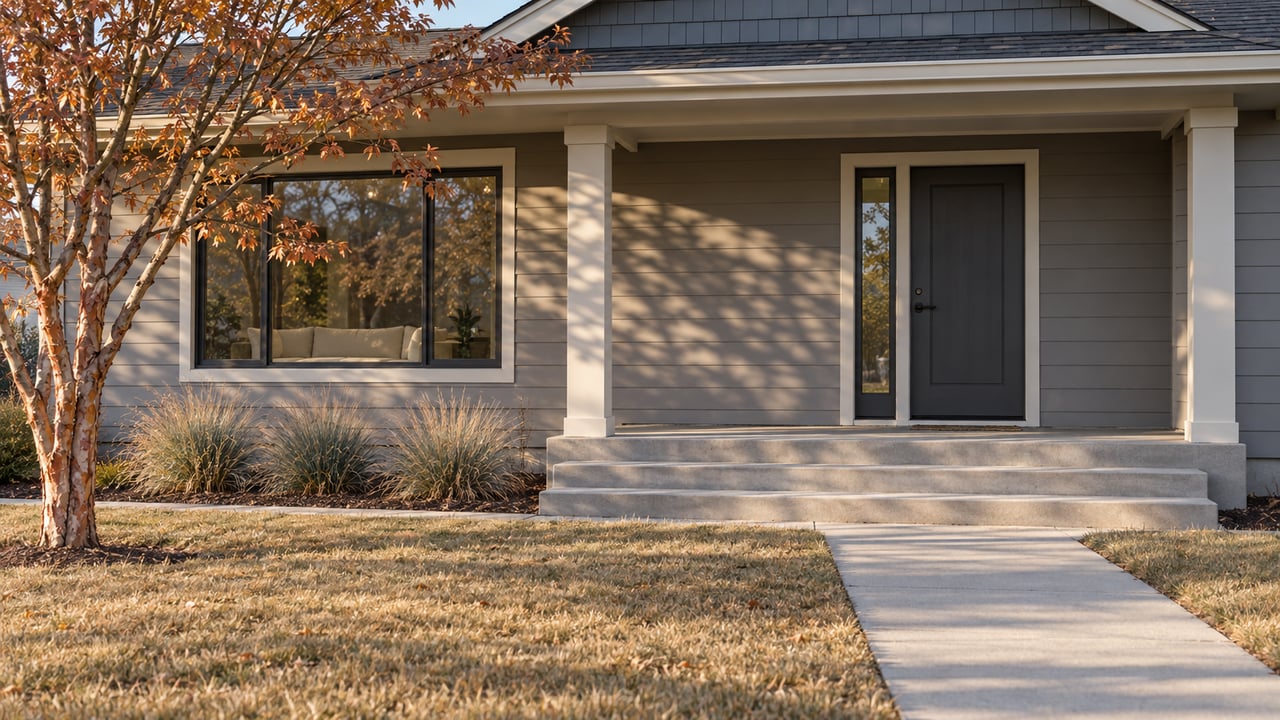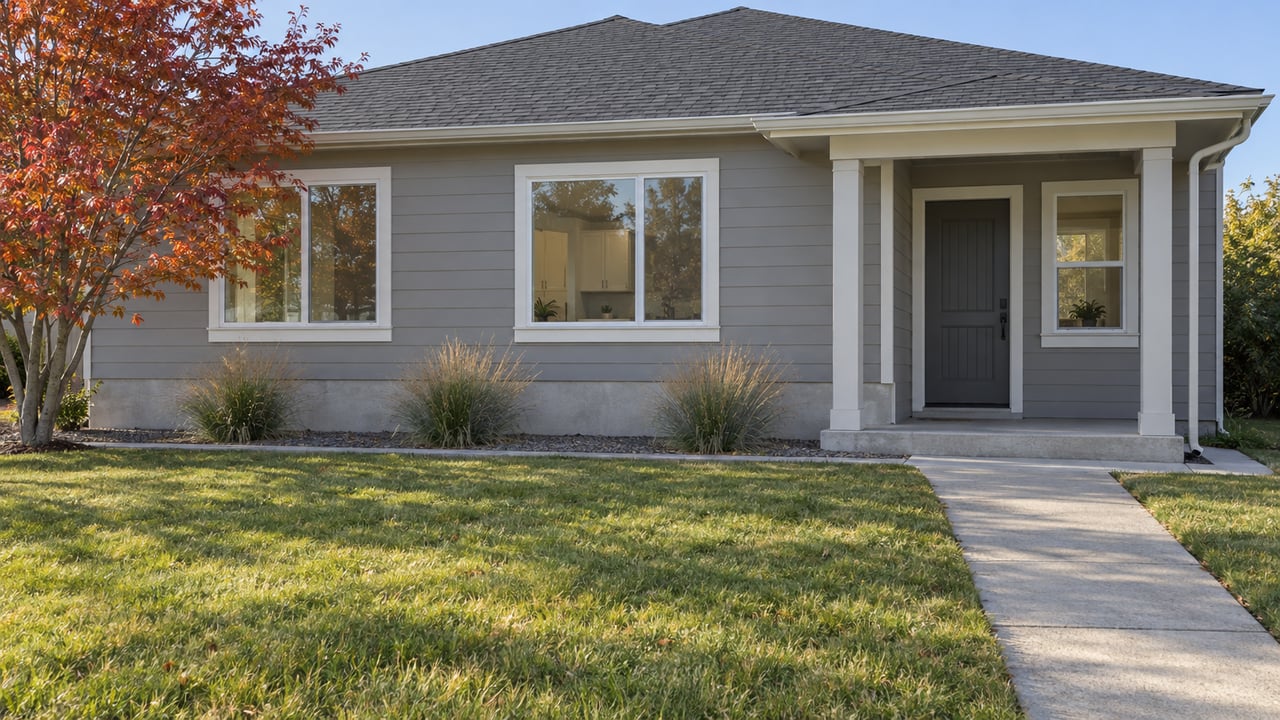
Can you add a backyard cottage to a house in Selah today? Under the current code, no. Selah's own draft zoning text defines an accessory dwelling unit and then says these units "are not presently permitted in the city of Selah." The current code allows something smaller called an "accessory apartment." It can be up to 800 square feet, and it has to sit inside an owner-occupied, site-built single-family home or that home's accessory garage.
That is set to change. Selah is in the middle of its 2026 comprehensive plan update. As drafted, the zoning rewrite would allow up to two ADUs on a lot. The same draft also sets the conditions a lot has to meet first. If you are comparing Selah properties with a second unit in mind, those conditions matter more to a lot's future value than the headline allowance does.
What changes on paper
Here is the current accessory apartment rule next to the draft ADU standard. Neighboring Yakima's current rule is included for comparison.
| Selah today: accessory apartment | Selah draft: ADU | City of Yakima today | |
|---|---|---|---|
| Units allowed | One, inside the home or garage | Up to two, attached or detached | One per lot |
| Maximum size | 800 sq ft | 1,000 sq ft | 1,000 sq ft |
| Owner occupancy | Required | Not required, except for short-term rentals | Not specified in its FAQ |
| Parking | Not specified in its definition | At least one space | Not specified in its FAQ |
| Separate sale | Not addressed | Allowed by condominium | Not addressed |
The Selah draft column comes from the city's draft Title 10 redline. It allows two attached units, one attached and one detached, two detached units, or the conversion of an existing building such as a detached garage. It caps ADU roof height at 24 feet. It also says the city may not require public street improvements as a condition of permitting an ADU. The Yakima column comes from the City of Yakima planning FAQ. It says ADUs are allowed on single-family lots in most zones without land-use review, need a building permit, and are limited to 1,000 square feet and one per lot.
The garage clause gives some owners a head start. Under the draft, a conversion of an existing structure "shall be allowed to occur even if the existing structure does not meet the current design and development standards." On a lot with an older detached garage, the shell of a future unit may already be standing.
Why the rewrite is happening now
Selah isn't writing these rules on its own initiative. Two 2023 state laws are behind them. RCW 36.70A.681, which came out of ESHB 1337, requires cities planning under the Growth Management Act to allow at least two ADUs on lots in urban growth area zones that permit single-family homes. It also bars cities from requiring owner occupancy and limits ADU impact fees to 50 percent of what the main house pays. Under RCW 36.70A.680, those requirements take effect at the same time as a city's next periodic comprehensive plan update.
For Selah, that update is due now. The city's planning staff report says Yakima County and its cities must finish the current periodic review on or before Dec. 31, 2026. The Planning Commission held a public hearing on Sept. 17 and continued it on Oct. 6. On Oct. 7, consultants told the City Council that the code would need to allow two ADUs per lot, revise parking rules, and add a unit-lot subdivision process, according to Citizen Portal's coverage of the meeting. The City Council takes final action on both the plan and the zoning code. Until it adopts them, the accessory apartment rule above is still the one in force.
Mayor Roger Bell has acknowledged that the change isn't universally popular. "Part of it is facilitating ADUs. While everyone doesn't like those particularly, there are those people who do. The problem is to manage those and go through and still be, you know, the same old Selah," Bell told Apple Valley News Now. The draft's conditions are where that kind of management shows up.
The conditions that decide which lots qualify
The draft allows up to two ADUs "on all lots that meet the minimum lot size." In Selah, minimum lot size depends heavily on the ground the house sits on.
The current R-1 code sets new-lot minimums that go up with slope:
- 8,000 square feet on ground under 10 percent slope with municipal water and sewer
- 10,000 square feet on slopes over 10 percent and under 15 percent
- Half an acre on slopes over 15 percent and under 20 percent
- One acre on slopes over 20 percent and under 25 percent
- Five acres on slopes above 25 percent
Under that table, two 9,000-square-foot lots can come out differently. On flat ground, the lot clears the 8,000-square-foot line. At a 12 percent slope, the same lot falls short of the 10,000-square-foot line. The draft revises the residential lot tables too, so the adopted figures may differ. What won't change is how the test works. A lot that matches its neighbor in size can still miss the threshold because of its slope.
The draft adds three more conditions:
- Septic. ADUs "shall not be allowed in locations where development is restricted under other laws, rules, or ordinances due to physical proximity to on-site sewage system infrastructure, critical areas, or other unsuitable physical characteristics of a property." On a septic lot, the drainfield's location shapes where a second unit can go, or whether one fits at all.
- Alleys. A detached ADU may sit right on the property line along a public alley, "unless that alleyway is routinely plowed by the city." Whether the city plows a given alley in winter decides whether a backyard unit can use that edge of the lot.
- Parking. Each ADU needs at least one parking space. The council discussion also covered allowances for some existing gravel parking areas and an 8-by-20-foot parking space size.
Taken together, the draft favors flat, sewered lots with room for parking and a usable rear edge. It does less for steep lots and for lots where a septic system limits building.
Owning a second unit and selling one are separate questions
The draft says ADUs "may be sold by condominium, in accordance with RCW 36.70A.681(1)(k)." The state provision is specific. It stops a city from blocking the independent sale of a condominium unit solely because the unit was built as an ADU. It doesn't turn every backyard unit into its own lot.
The update also creates a unit-lot subdivision process in Chapter 10.50. A development is reviewed as a whole on a parent lot, and individual unit lots are created within it. That process comes with provisions for common areas, shared access and parking, easements, maintenance agreements and plat notes. This is a state requirement too. RCW 58.17.060, amended by SB 5258, directs cities to adopt unit-lot procedures, with the remaining parent-lot area held in common by the unit-lot owners or their association. The consultants described this approach to the council as a way to legally separate ADUs when the overall development standards are met.
The unit-lot path has paperwork built in. The state statute requires recorded plat notes that tie each approval to the parent-lot project, and the parent-lot area stays in common ownership. Selah's draft adds provisions for shared access, parking, easements and maintenance agreements. A buyer planning to split off a unit on a Selah lot is taking on that structure along with the backyard.
Where the rental benchmark and new supply stand
Some owners will judge a second unit by the rent it could bring. One public reference point moved in the wrong direction this fall. HUD's FY2027 Fair Market Rents took effect Oct. 1, 2026. For the Yakima metro area, which covers Yakima County, they set a studio at $997 a month, a one-bedroom at $1,004 and a two-bedroom at $1,313. The FY2026 figures had been $1,040, $1,047 and $1,374. These are the HUD voucher program benchmarks published Sept. 1, 2026. They aren't asking rents for a particular unit.
ADUs will also compete with new homes. According to Apple Valley News Now, Bell said three housing developments are in progress. One is expected to add about 45 homes over the next couple of years starting around $300,000, and the others are expected to start at $450,000 to $500,000. Bell put Selah's need at roughly 500 homes over 20 years and said the city is considering expanding its urban growth area to the east. One subdivision with a filed application is Speyers Landing on Lynnwood Lane. It's a preliminary long plat for 23 single-family lots of 8,026 to 11,266 square feet, and it still needs City Council approval.
Quick answers
Does the draft require the owner to live on the property? Only for short-term rentals. Otherwise the draft says ADUs aren't required to be owner-occupied.
Would a Selah ADU trigger impact fees? The draft says that if the City of Selah implements impact fees in the future, an ADU would pay no more than 50 percent of the fee on the main house.
Does the draft add other housing types? Yes. It adds duplexes, triplexes and townhouses to the permitted-use table, along with emergency, transitional, supportive and co-living housing.
This post is general information about a draft rule, not legal, tax or financial advice. Confirm how any adopted code applies to a specific property with the City of Selah and the right professional.
Two Selah lots can look the same in a listing and carry very different second-unit potential under the new code. If you're weighing a purchase or a sale where that difference matters, Cory Bemis can walk through a specific property's lot size, slope and utility setup with you before you make an offer or set a price.